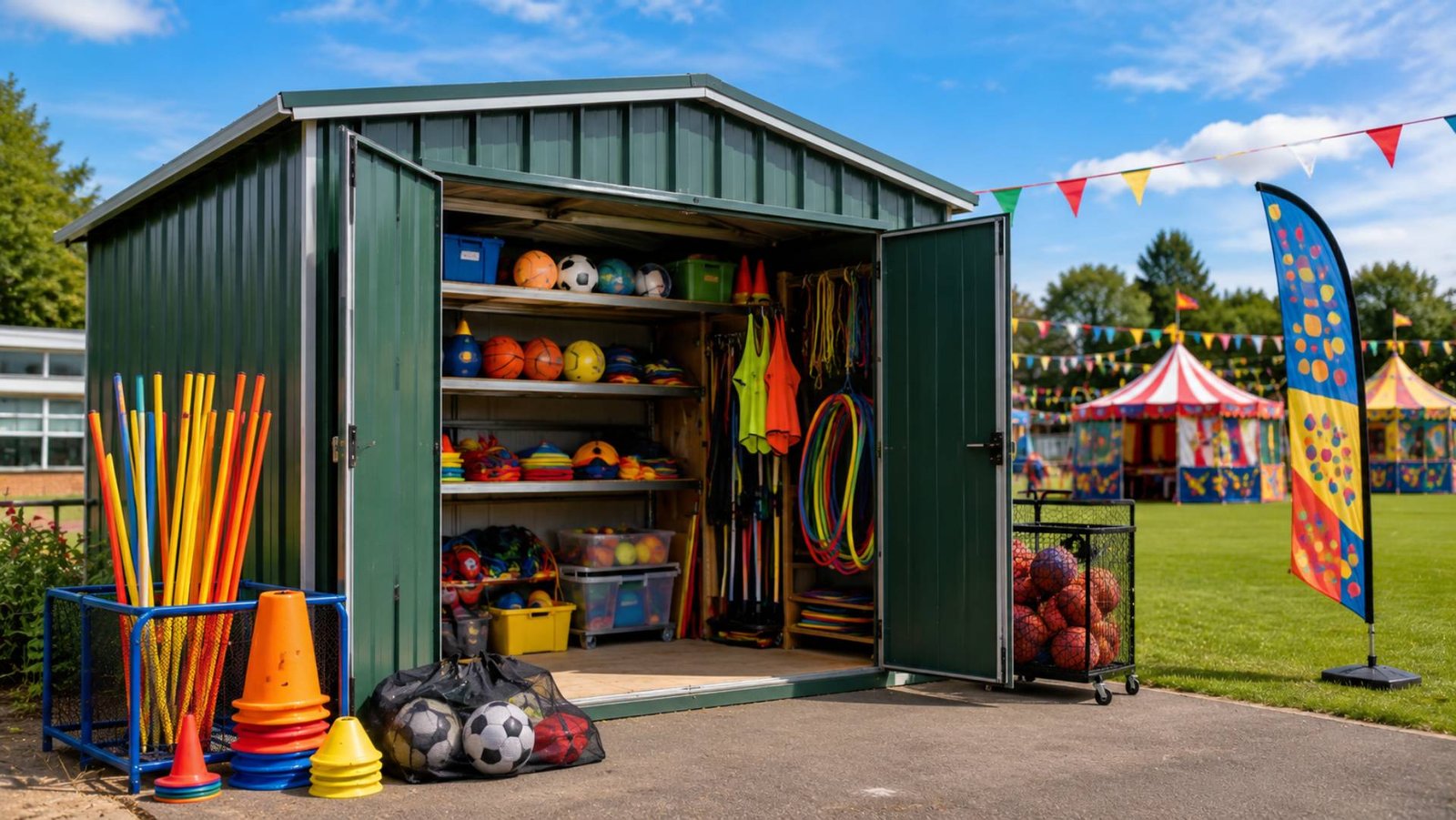
Carnival season exposes every weakness in a school sports shed. The measuring tape is missing, relay batons sit beneath football bags, and the only working pump has disappeared into another department. These problems are rarely caused by a lack of effort. They usually come from storage that reflects past purchases rather than the way staff prepare and run events.
A useful redesign begins with the carnival program. Staff can list each event, then trace what is needed from setup to pack-down. A long jump station may require markers, measuring tools, rakes and recording materials. Track events need lane items, batons and starting resources. This event-first method reveals gaps more clearly than counting boxes of athletics equipment.
The next step is zoning. Frequently used items should sit near the entrance, while bulky or seasonal gear can occupy deeper shelving. Separate zones for track, jumps, throws, timing and general field setup reduce searching. Clear labels should use plain names that students and relief teachers can understand without an induction.
Small items need containers, not open shelves. Batons, pegs, clips, whistles and repair parts disappear quickly when mixed together. Transparent tubs or labelled drawers make stock levels visible. A simple shadow board can work for tools that must return to a fixed place after each use.
Long and awkward items require secure support. Rakes, marker poles and measuring sticks should not lean loosely in a corner where they can fall or block access. Wall racks or vertical bays can keep them controlled, provided the installation suits the shed and items can be lifted safely. Heavy gear belongs at a practical height rather than above shoulder level.
Condition checks should happen before the busiest term. Staff can inspect athletics equipment for cracks, sharp edges, loose fittings, fading labels and other signs of wear. Items that need repair should move to a clearly marked quarantine area. Leaving damaged gear on the normal shelf invites someone to assume it is ready for use.
A checkout system does not need expensive software. A clipboard, whiteboard or shared digital sheet can record the item, borrower and expected return date. The important point is consistency. Equipment often goes missing because it moves between classrooms, ovals and storage rooms without any visible trail.
Carnival kits can save time. Instead of collecting ten separate items on the morning of an event, staff can prepare labelled tubs for each station. The kit can include a contents list, setup notes and a return checklist. Consumables should be checked after use so the kit is ready for the next competition.
Access must be controlled without creating a bottleneck. Relevant staff need reliable keys or approved access, but students should enter only with supervision. Walkways must remain clear, and nothing should be stored in front of electrical boards, exits or fire equipment.
An annual review keeps the system useful. Event programs change, enrolments grow and new purchases alter storage needs. Staff should remove obsolete items, update labels and compare stock with the next season’s plans. Purchasing decisions can then focus on genuine shortages rather than duplicate gear hidden in the shed.
Weather preparation deserves its own shelf or kit. Carnival days can shift from strong sun to rain, so staff may need approved covers, towels, clipboards and spare labels. Wet equipment should not be sealed in storage after the event. It needs to be cleaned and dried according to its material before returning to the normal zone. This routine protects condition and stops one rushed pack-down from affecting the next program.
A well-organised sports shed does more than look tidy. It shortens setup, reduces lost teaching time and makes faults easier to spot. When athletics equipment is arranged around real carnival tasks, staff can prepare each station with fewer surprises and give students a smoother day of competition.